
Blog
Golf Performance and Recovery in Maui: How SoftWave Therapy Keeps You on the Course with Dr. 808
Staying on the Course in Maui: How Golfers Recover Faster with SoftWave Therapy
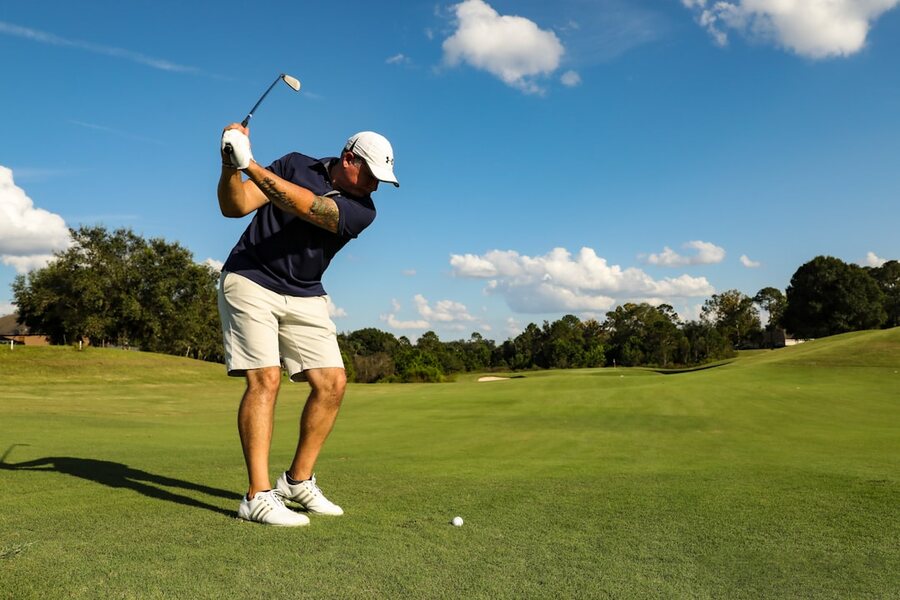
Golf on Maui is one of the great pleasures of island life. From the ocean views in Kihei and Wailea to the trade winds that push your ball in ways you never expected, the courses here reward players who can stay loose, rotate freely, and keep coming back week after week. The trouble is that golf, for all its calm exterior, places a surprising amount of repetitive stress on the body. Low backs tighten, hips lose their turn, shoulders and elbows ache, and wrists start to complain after a long round or a heavy week on the range. At Shockwave Maui, Dr. Caleb J. Craig, known around the island as Dr. 808, helps golfers recover from those nagging aches and stay ready for the next tee time using SoftWave TRT, a non-invasive regenerative therapy designed to support the body's own healing.
Request an Appointment at Shockwave Maui
Why the Golf Swing Wears the Body Down
A golf swing looks smooth and controlled, but it is one of the most demanding rotational movements in all of sport. In a fraction of a second you coil, unwind, and decelerate through impact, sending force through the spine, hips, shoulders, and arms. Do that once and it feels effortless. Do it a hundred times across a round, plus a warm-up bucket at the range, and the cumulative load adds up quickly. Repeat that several days a week, season after season, and the tissues that absorb all that torque begin to protest.
The problem is rarely a single dramatic injury. More often it is the slow accumulation of repetitive rotational stress on the same structures, with limited time to fully recover in between. That is why so many golfers describe their aches as something that "just crept up" rather than an injury they can point to.
The Common Trouble Spots for Golfers
- Low back: The lumbar spine takes a tremendous amount of rotational and side-bending force during the swing, making it the single most common area of complaint among golfers.
- Hips: Your hips drive rotation and power. When mobility drops, other areas overwork to compensate, and stiffness or deep aching can set in.
- Shoulders: The lead shoulder in particular travels through a large range of motion under load, which can irritate the rotator cuff and surrounding tissues.
- Elbows: Repetitive gripping and the impact of club to ball or turf can inflame the tendons on the inside and outside of the elbow.
- Wrists and hands: The wrists hinge and release with every swing and absorb the shock of contact, especially on fat shots or firm lies.
None of these are unusual, and none of them mean your golf days are behind you. They are signals that the tissue is under repeated load and needs better support to recover.
Why Golf Aches Tend to Linger
Tendons, ligaments, and the deeper connective tissues that stabilize the spine and joints have a relatively modest blood supply compared to muscle. Good circulation is what delivers the oxygen and nutrients tissue needs to repair itself. When these areas are stressed repeatedly and given limited blood flow to heal, they can stay irritated far longer than a simple muscle strain.
For an active golfer, this creates a frustrating cycle. You rest for a few days, feel a little better, head back out, and the same spot flares up again because the underlying tissue never fully recovered. Simply avoiding golf altogether is not much of a solution for people who love the game and want to stay active. What many golfers really need is a way to support genuine tissue recovery so they can keep playing without constantly fighting the same aches.
How SoftWave Therapy Helps Golfers Recover
SoftWave TRT uses a distinctive form of technology called electrohydraulic, broad-focused acoustic waves. A spark generates an acoustic wave that a patented parabolic reflector spreads across a wide, deep treatment area. It is the only broad-focused shockwave of its kind, different from the radial, electromagnetic, and piezoelectric devices you may have heard of. Those waves penetrate deep into tissue to help trigger the body's own healing cascade in the areas that golf tends to overload.
In plain language, here is what SoftWave is designed to do:
- Activate resident stem cells already present in the tissue and encourage them to migrate toward areas that need repair.
- Support angiogenesis, the growth of new blood vessels, which is designed to improve circulation to those stubborn, low-blood-flow tendons and joints.
- Encourage cell proliferation and collagen production, the building blocks your body uses to rebuild strong connective tissue.
- Help modulate inflammation, calming the ongoing irritation that keeps golf aches lingering.
- Assist the clearance of damaged and worn-out cells so healthier tissue has room to recover.
Because it targets the recovery process itself rather than simply masking discomfort, many patients find SoftWave a helpful fit for the repetitive-load aches that come with an active golf lifestyle. It may help the body do what it is already trying to do, only more effectively.
What to Expect at Shockwave Maui
One of the reasons golfers appreciate SoftWave is how well it fits around an active schedule. The therapy is non-invasive, with no needles, no drugs, no surgery, and no downtime. Sessions typically run about 10 to 15 minutes, and most patients complete a series over roughly six to eight weeks. Because the therapy works with your body's own biology, healing can continue for weeks and even months after your final session.
For a Maui golfer, that means you are not sidelined for weeks the way a more aggressive intervention might require. There is no lengthy recovery to schedule around, so staying on top of your body between rounds becomes far more realistic. Dr. 808 will evaluate your specific trouble spots, whether that is a cranky low back, a stiff lead hip, or an elbow that flares after every range session, and build a plan around how you actually play.
SoftWave technology has been studied at leading institutions and is used by clinicians who work with professional and collegiate athletes, which speaks to why performance-minded golfers are increasingly curious about it. It is not a guarantee or a magic fix, and it does not replace sound medical advice, but it is a responsible, well-designed tool for supporting recovery.
Ready to stop fighting the same aches every round? Schedule your visit with Dr. 808 at Shockwave Maui and take a real step toward staying loose on the course.
Recovery Is Part of Playing Your Best
The golfers who keep playing well into their later years are rarely the ones who simply push through pain. They are the ones who take recovery seriously, who keep their hips and shoulders mobile, and who address small aches before those aches turn into layoffs. On Maui, where the courses are this good and the weather invites you out nearly year-round, staying healthy is the difference between watching from the clubhouse and walking the eighteenth green feeling strong.
SoftWave therapy fits naturally into that mindset. It is a way to support your body's healing between rounds so the repetitive rotational load of the swing does not slowly chip away at your game. Whether you play a couple of times a month or you are chasing your handicap several days a week, caring for the tissues that power your swing is a smart investment in your golf.
Ready to Take the Next Step?
If nagging golf aches are getting between you and the courses you love in South Maui, Dr. 808 can help you build a recovery plan designed around your swing and your schedule. Do not wait for a small ache to become a season on the sidelines.
Request your SoftWave Therapy new patient visit online today
Contact Shockwave Maui
Shockwave Maui
2395 S Kihei Rd #202
Kihei, HI 96753
Phone: (808) 875-4357
Our Main Office Website: https://southmauichiropractic.biz/
‹ Back


 2395 S Kihei Rd #202, Kihei