
Blog
IT Band Syndrome and Runner's Knee: SoftWave Therapy Relief for Maui Runners with Dr. 808
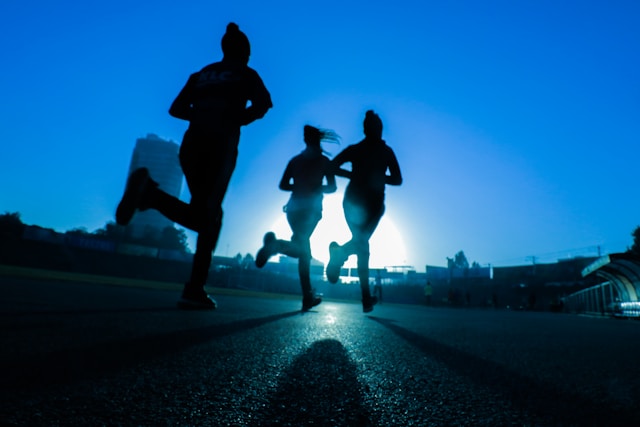
Why Does the Outside of My Knee Burn on the Way Down Haleakala?
If you run the coastline in Kihei or hike the switchbacks on Maui's volcanic trails, you have probably felt it: a sharp, burning ache on the outside of the knee that flares with every downhill step, or a deep soreness under the kneecap that shows up a mile or two into your run. Two of the most common culprits are iliotibial band syndrome (often shortened to IT band syndrome) and runner's knee, the everyday name for patellofemoral pain. Both love active people, both tend to come back, and both can quietly steal the joy out of a lifestyle built around trails, beaches, and long weekend miles.
At Shockwave Maui, Dr. Caleb J. Craig, known around the island as Dr. 808, works with runners and hikers who want to keep moving without babying a cranky knee. One of the tools he uses is SoftWave TRT, a non-invasive regenerative therapy designed to support the tissues that keep taking the load mile after mile. This article explains what these conditions are, why they nag at endurance athletes, and how SoftWave may help the body do its own repair work.
Request an Appointment at Shockwave Maui
IT Band Syndrome and Runner's Knee: What Is Actually Going On
Although people lump lateral knee pain and kneecap pain together, they involve different tissues and different mechanics. Understanding the difference helps explain why they are so persistent.
Iliotibial Band Syndrome
The iliotibial band is a thick strip of connective tissue that runs down the outside of the thigh, from the hip to just below the knee. It is not a muscle you can stretch loose in a few seconds. It is a dense band of fascia that tenses and relaxes as your hip and knee move. When you run or hike, especially downhill, the band glides over the bony bump on the outside of the knee thousands of times. If the surrounding tissue gets irritated and inflamed, that repeated friction and compression produces the classic sharp, burning pain on the outside of the knee. Some people also feel it higher up, near the outside of the hip.
Runner's Knee (Patellofemoral Pain)
Runner's knee refers to pain around or behind the kneecap, where the patella glides in a groove at the end of the thigh bone. When the kneecap does not track smoothly through that groove, the cartilage and surrounding tissue take uneven stress. The result is a dull ache under or around the kneecap that gets worse with running, stairs, squatting, or sitting with the knee bent for a long time. Many patients describe it as a deep soreness that is hard to pin to one exact spot.
Why These Injuries Keep Coming Back
The frustrating part for Maui runners and hikers is not the first flare-up. It is the return trip. You rest, the pain fades, you get back on the trail, and within a few weeks the same ache is back. There are real reasons this happens.
- They are overuse injuries, not single-event injuries. These conditions build up from thousands of repetitions, so resting for a week rarely undoes the underlying tissue irritation.
- Connective tissue heals slowly. The IT band and the tissues around the kneecap have limited blood supply compared to muscle. Less circulation can mean a slower, more stubborn healing response.
- The real driver is often up the chain. Weakness or poor control at the hips and glutes changes how the knee tracks and how the IT band loads. If that is not addressed, the knee keeps paying the price.
- Maui terrain is demanding. Steep descents and long sun-soaked road miles increase the eccentric load on the knee, which is exactly the load that aggravates both conditions.
- Athletes return too soon. When pain quiets down but the tissue has not fully recovered, full mileage restarts the cycle.
This is why simply masking the pain rarely solves the problem. To break the loop, the goal is to actually support tissue repair and improve the local environment where the injury lives.
How SoftWave Therapy Helps Support Recovery
SoftWave TRT is a form of regenerative shockwave therapy. It uses an electrohydraulic, spark-generated broad-focused acoustic wave delivered through a patented parabolic reflector. In plain terms, it sends deep, dispersed healing energy into a region of tissue rather than a single narrow point. It is the only broad-focused shockwave technology of its kind, which is different from radial, electromagnetic, and piezoelectric devices. That depth and coverage are useful for the kind of connective-tissue irritation that drives IT band syndrome and runner's knee.
Rather than forcing a result, SoftWave is designed to prompt the body's own repair cascade. In plain language, it may help by:
- Activating resident stem cells and encouraging them to migrate toward the irritated tissue, supporting natural repair.
- Stimulating angiogenesis, the growth of new blood vessels, which may improve circulation to areas that normally heal slowly.
- Promoting cell proliferation and collagen production, the building blocks of healthy, resilient connective tissue.
- Modulating inflammation so the local environment can shift out of a stuck, irritated state.
- Helping clear damaged and senescent cells so healthier tissue has room to rebuild.
Because these are biological processes, the healing response is not instant. It continues to work in the weeks and even months after your sessions, which is why SoftWave is often thought of as an investment in tissue quality rather than a quick numbing fix.
What to Expect With SoftWave at Shockwave Maui
One of the reasons active people appreciate SoftWave is that it fits into a training life without shutting it down. The therapy is non-invasive, with no needles, no drugs, no surgery, and no downtime. Sessions are short, roughly 10 to 15 minutes, and Dr. 808 typically recommends a series over about 6 to 8 weeks so the tissue can respond and rebuild over time.
SoftWave is often used alongside the rest of a smart recovery plan. Addressing hip and glute strength, refining running and hiking mechanics, and managing training load all matter. SoftWave is designed to support the tissue-level healing while those other pieces address the mechanics that caused the problem in the first place. For a runner or hiker, that combination is the goal: not just quieter pain today, but a knee that can handle the descent next time.
It is worth being measured here. SoftWave is not a guaranteed cure, and it does not replace medical care or a proper evaluation. What it offers is a non-invasive way to support your body's natural healing. SoftWave technology has been studied at leading institutions and is used by clinicians who work with professional and collegiate athletes.
Schedule your SoftWave consultation with Dr. 808 and get back on the trail with confidence.
Getting Back to the Miles You Love
Lateral knee pain and kneecap pain do not have to be the price of an active Maui lifestyle. When you understand that these are overuse injuries rooted in slow-healing tissue and mechanics that need attention, the path forward gets clearer. Rest alone often leaves the underlying problem in place. Supporting real tissue repair, alongside the strength and mechanics work, is what helps runners and hikers stop repeating the same cycle.
If your knee flares every time you build back your mileage, it may be time to look deeper than a foam roller and a few days off. Dr. 808 can evaluate what is driving your pain and talk through whether SoftWave TRT is a good fit for your goals.
Ready to Take the Next Step?
Do not let a burning outside knee or a nagging kneecap keep you off Maui's trails and roads. Reach out to Shockwave Maui and let Dr. 808 help you build a plan to recover and get back to running strong.
Request your SoftWave Therapy new patient visit online today
Contact Shockwave Maui
Shockwave Maui
2395 S Kihei Rd #202
Kihei, HI 96753
Phone: (808) 875-4357
Our Main Office Website: https://southmauichiropractic.biz/
‹ Back
 2395 S Kihei Rd #202, Kihei